Muhammad Uzair Aslam, founder of the Karachi R User Group, spoke with the R Consortium about growing an open and volunteer-led R community in Pakistan—one of the first of its kind in the country. Since starting the group in 2023, Uzair has focused on building trust, increasing awareness of R, and creating accessible events for learners across cities. The R Consortium spoke with Uzair about the Karachi R User Group’s work with R for Public Health Data Analysis previously. This time, Uzair is sharing how the group has evolved from informal online meetups to hosting international speakers and publishing sessions on YouTube. He also discussed the community’s rising interest in tools like Quarto and ggplot2, recent consulting work in industrial forecasting using R, and the ongoing challenge of encouraging more local contributions.
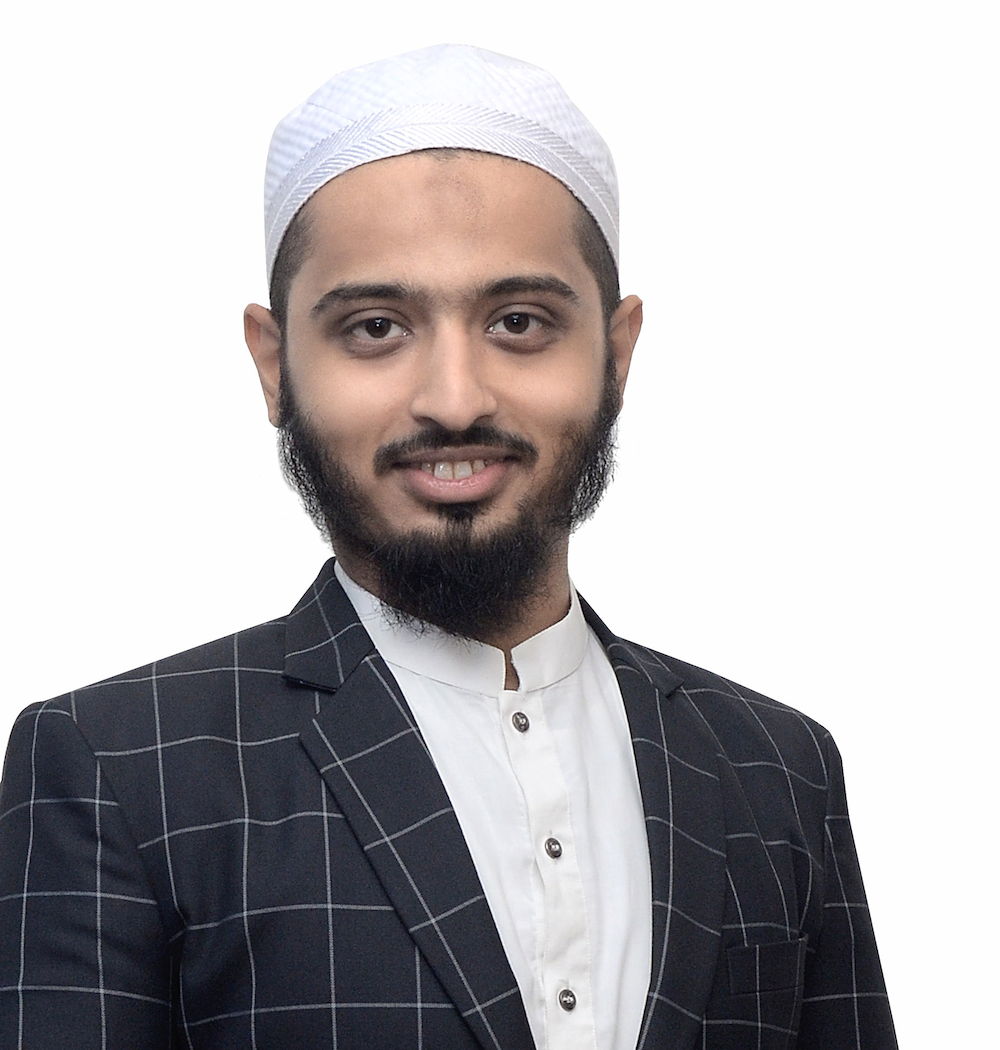
Please update us on how the group has been doing since we last spoke and share your experience.
Since we last spoke, our user group has made significant strides in growth and community engagement. We started this initiative in 2023 with just 10 to 15 members. During that first year, our focus was on building the foundation—introducing the concept of an open, volunteer-led R community in Pakistan, which was the first of its kind in the country. One of our key challenges early on was gaining trust and clarifying that these events are completely free and community-driven, with no commercial backing.
In 2024, we began organising more frequent and structured events, which led to a noticeable increase in interest and participation. Our commitment to consistency and open learning helped establish our reputation, and we gradually grew to a community of over 500 members—a major milestone for us.
In 2025, we started inviting international speakers to bring in global perspectives and inspire our members. In April, we hosted Jeremy Horne, an experienced R practitioner, whose talk was very well-received and added tremendous value to our growing community.
While attendance started modestly at around 10 to 15 participants per session, we are now seeing numbers reach up to 20 attendees, reflecting a steady and encouraging upward trend. Overall, it’s been a rewarding journey, and we’re excited to continue expanding our reach and impact in the months ahead.
Are you hosting all your events online?
Currently, we are planning to host all our events online. The primary goal is to increase visibility and awareness of our meetup community and make participation more accessible for people across different cities. By focusing on building a consistent online presence, we aim to reach a wider audience and encourage regular engagement. Once we achieve a steady attendance of around 20 participants per session, we plan to transition into in-person meetups as well. Hosting physical events is one of our key objectives for this year, as it will allow us to strengthen community bonds and foster deeper collaboration among members.
Since we last spoke, have you noticed any changes in the R community in Pakistan? Have there been any developments or shifts in how R is being adopted or perceived locally?
Yes, since we last spoke, I’ve observed a noticeable and encouraging shift in the adoption of R within Pakistan. Through our regular community meetups and workshops, more individuals—especially students and early-career professionals—are beginning to explore and use R. While Python remains popular, our efforts in hosting free workshops and open community sessions have helped introduce R to a broader audience. This has contributed to a positive shift in perception across both industry and academia.
In academic circles, students increasingly find R accessible for statistical computing, data analysis, and academic publishing, thanks to its rich ecosystem of packages and reproducible reporting tools like Quarto. In the industry, there’s a gradual but growing recognition of R’s value, particularly in domains that require strong statistical modelling and data visualisation. Overall, the R community in Pakistan is slowly but steadily expanding, with a growing sense of curiosity, collaboration, and openness to learning.
Have you faced specific challenges in organising this group so far? Are there any tools or techniques that have been particularly helpful to you?
Building and organising our community has come with its fair share of challenges. One of the most persistent issues has been the lack of speaker availability. It’s often difficult to motivate individuals to present their work or actively participate in discussions. While I’ve delivered several talks myself—both within Pakistan and internationally—encouraging others to step up and share their knowledge remains a tough task. Another major challenge is attracting and retaining attendees. To address this, I created a dedicated LinkedIn page for the Karachi User Group last year, aimed at raising awareness and promoting our meetups. Despite these efforts, generating consistent interest and boosting attendance continues to be an ongoing effort.
To improve engagement, I’ve been leveraging multiple social media platforms, including Facebook, LinkedIn, and WhatsApp, where I regularly post event updates in relevant groups. The WhatsApp group, in particular, has helped foster better communication and a sense of community among members. More recently, we launched a YouTube channel where we upload recordings of all our meetups. This not only ensures accessibility for those who can’t attend live but also helps us build a wider presence online. These tools and strategies have been instrumental in addressing some of our key challenges and continue to shape the way we grow our community.
You hosted a Meetup titled “Reporting Champions Trophy Data using Quarto and R,” can you share more on the topic covered? Why this topic?
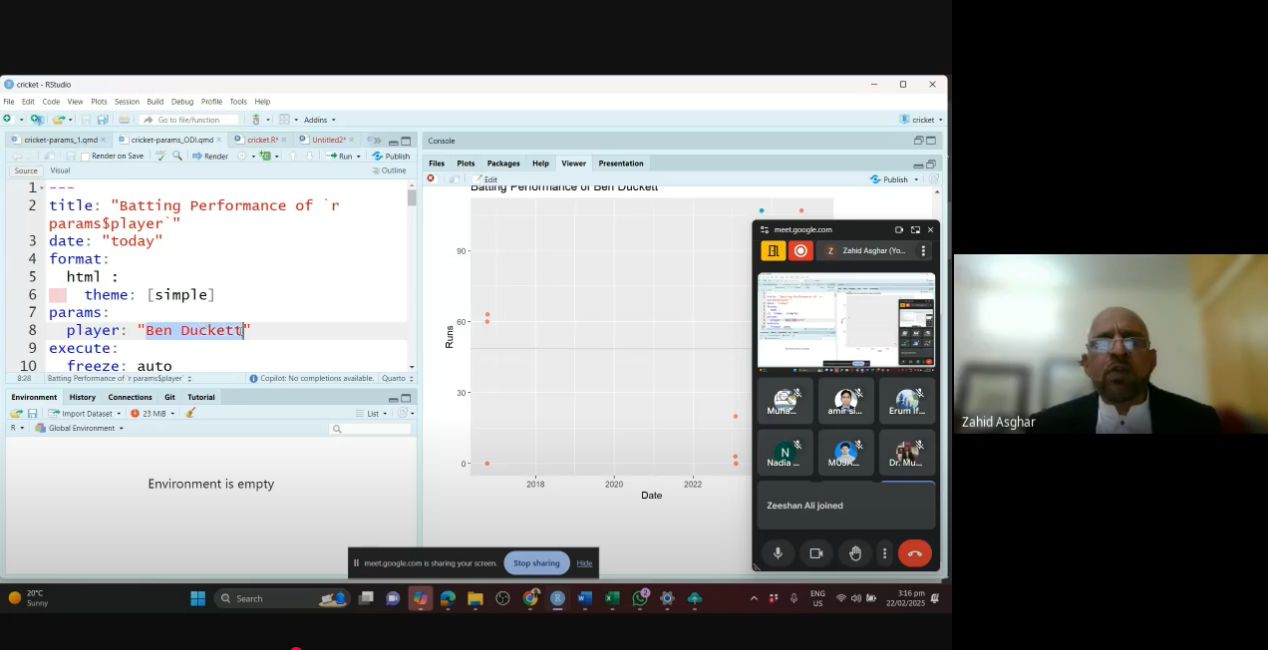
We recently hosted an engaging talk on our Meetup group by Dr. Zahid Asghar from Islamabad University titled “Reporting Champions Trophy Data using Quarto and R.” The session introduced the community to Quarto as a modern tool for creating parameterised, automated, and visually rich reports. Using real-world data from the ESPN Cricinfo API, Dr. Zahid demonstrated how to generate customised player statistics reports—blending R’s data manipulation capabilities with Quarto’s dynamic reporting features. This topic was chosen to help data professionals move beyond static dashboards and adopt reproducible, scalable reporting workflows, and it was well-received by attendees for its practical relevance and clarity.
How do I Build an R User Group?
R Consortium’s R User Group and Small Conference Support Program (RUGS) provides grants to help R groups organize, share information, and support each other worldwide. We have given grants over the past four years, encompassing over 76,000 members in over 90 user groups in 39 countries. We would like to include you! Cash grants and meetup.com accounts are awarded based on the intended use of the funds and the amount of money available to distribute