Original post on the nlmixr2 project blog is here.
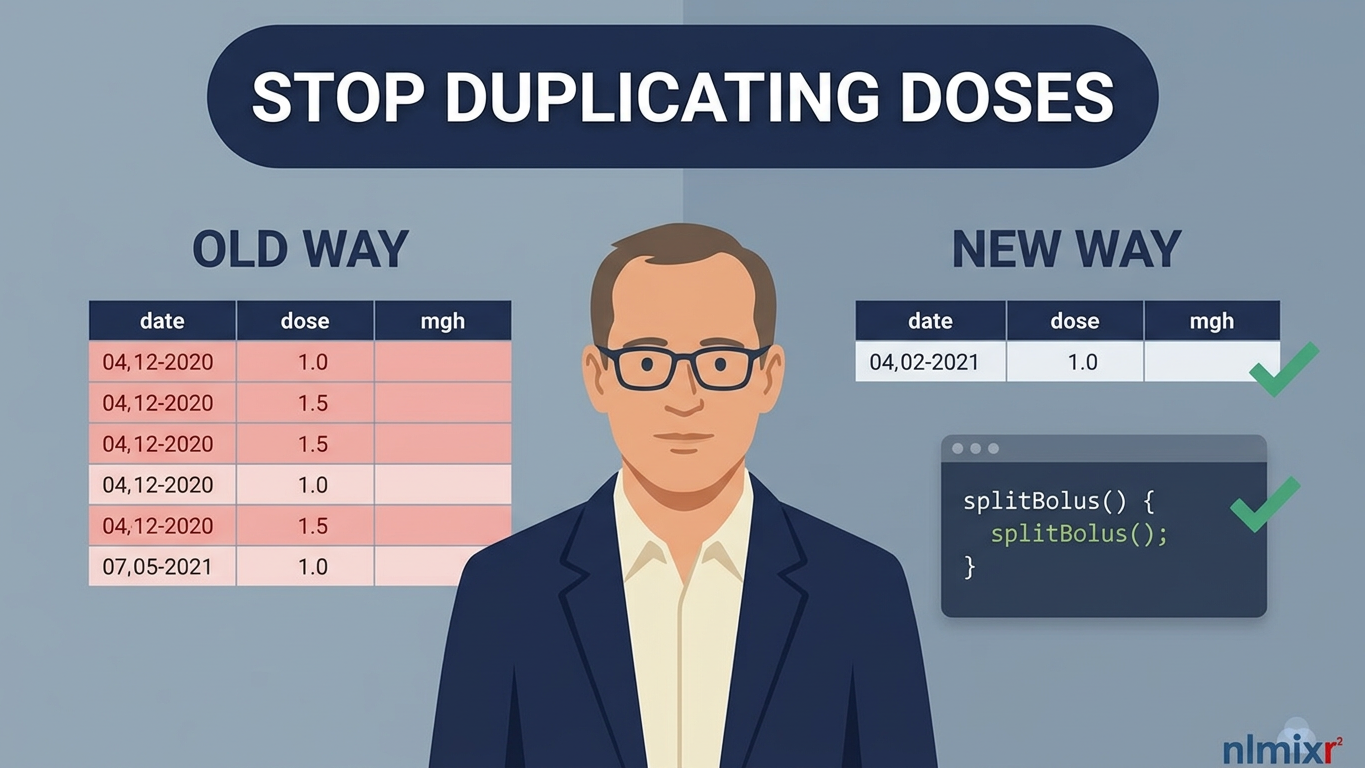
The nlmixr2 Working Group continues to expand what open source R tooling can support in pharmacometrics. In a new post, Matthew Fidler introduces four splitting directives in rxode2 and nlmixr2: splitBolus(), splitInfusion(), splitInfusionBolus(), and splitBolusInfusion(). A directive in the model({}) block takes each dose recorded against one compartment and sends a copy to each of several others. The dataset keeps one row per dose, the way it was given. Because nlmixr2 estimates with rxode2 models, the same directive works when you fit. It is in the current CRAN releases, rxode2 5.1.8 and nlmixr2est 7.2.1.
Each target receives the full amount unless f() assigns a share, and alag(), dur(), and rate() still set lag and infusion timing on each route. The post walks through a 60/40 fast and slow depot, a zero-order input combined with first-order absorption, infusions already recorded in the data, and rescue doses the model adds while it is solving. nlmixr2 applies the directive with FOCEi, SAEM, and the other estimation methods, and a VPC and the other post-fit tools keep that one-row-per-dose data. The dataset names only the source compartment.
Watch the 7-minute narrated walkthrough: https://youtu.be/RCjb5hoFFDY
Read the full post from the nlmixr2 blog: Dual absorption with one dose record
Why nlmixr2?
The vision of nlmixr2 is to develop a R-based open source nonlinear mixed-effects modeling software package that can compete with commercial pharmacometric tools and is suitable for regulatory submissions.
In short, the goal of nlmixr2 is to support easy and robust nonlinear mixed effects models in R.
Get involved in the nlmixr2 working group
The nlmixr2 working group is open to anyone interested in contributing to the project. You can get involved by:
Main repo: https://github.com/nlmixr2/nlmixr2
Issues: https://github.com/nlmixr2/nlmixr2/issues
Discussions: https://github.com/nlmixr2/nlmixr2/discussions