Original post on the nlmixr2 project blog is here.
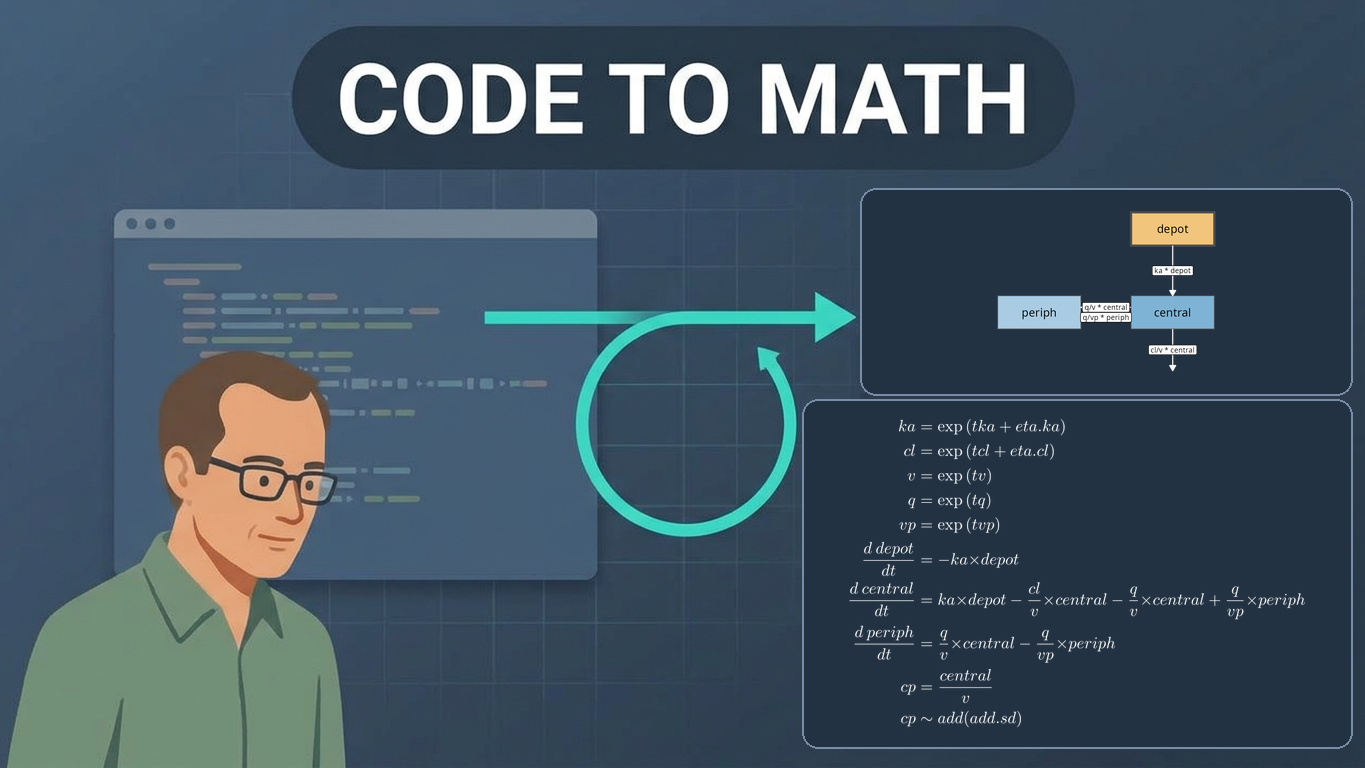
The nlmixr2 Working Group continues to expand what open source R tooling can support in pharmacometrics. In a new post, Matthew Fidler shows how the figure and the equations in a report can be generated from the model that was actually fit. nlmixr2plot 5.2.0 adds modelDiagram(), which reads the d/dt() equations and draws the compartment diagram. nlmixr2extra turns that same model object into aligned LaTeX equations with knit_print(). Because both read the fit, they stay with it when a transit compartment, an effect, or a covariate changes.
That closes a common gap in pharmacometric reports, where the diagram is drawn by hand and the equations are typed separately, then left behind as the model changes. The post covers three diagram engines (ggplot2, DiagrammeR, and Graphviz DOT), pharmacodynamic arrows whose direction is read from the equation, and one R Markdown file that knits the diagram, the equations, and the parameter table to Word, HTML, and PDF. In the development version of nlmixr2rpt (0.2.3), the default Word and PowerPoint reports open with that diagram and those equations.
Watch the 8-minute narrated walkthrough: https://youtu.be/Jf9QbmuR_Xw
Read the full post from the nlmixr2 blog: Model diagrams and equations, straight from the code
Why nlmixr2?
The vision of nlmixr2 is to develop a R-based open source nonlinear mixed-effects modeling software package that can compete with commercial pharmacometric tools and is suitable for regulatory submissions.
In short, the goal of nlmixr2 is to support easy and robust nonlinear mixed effects models in R.
Get involved in the nlmixr2 working group
The nlmixr2 working group is open to anyone interested in contributing to the project. You can get involved by:
Main repo: https://github.com/nlmixr2/nlmixr2
Issues: https://github.com/nlmixr2/nlmixr2/issues
Discussions: https://github.com/nlmixr2/nlmixr2/discussions